Labor is a restaurant's second-biggest cost after food, yet most stores still manage it on the vague sense that "payroll feels higher this month." To genuinely bring cost down, you first need to be able to quantify it — and once you do, you'll find most of the waste isn't in wage levels, but in "people scheduled at the wrong time."
This piece first shows you how to read two key metrics, then walks you through using scheduling and data to find hidden waste one item at a time and claw it back.
01Learn to measure: two metrics for understanding labor cost
Before you can cut cost, you have to be able to measure it. The two most practical labor metrics in restaurants are:
SPLH (Sales Per Labor Hour) = Revenue ÷ Total labor hours
Labor cost percentage tells you "for every $100 you earn, how much goes to people" — it's the top-line metric for controlling cost. SPLH (Sales Per Labor Hour) tells you "how much revenue each labor hour creates" — it's the metric for labor efficiency. Read them together: the cost percentage controls the total, SPLH watches efficiency. The higher the SPLH, the fewer labor hours it took to produce the same revenue, and the better your labor is being used.
The key mindset: cutting cost doesn't mean cutting people. Raising SPLH — making every labor hour more productive — usually balances cost and service far better than simply cutting heads. And the core lever for raising SPLH is scheduling.
02Put people in the right time slots: match labor to demand
The biggest labor waste almost always comes from "labor not matching business": a crowd of people idle at off-peak, then too few at peak so you tough it out or pay overtime. The fix is to move scheduling from "gut feel" to "demand-driven" — forecast how many people each time slot needs based on historical revenue and expected footfall, and schedule accordingly.
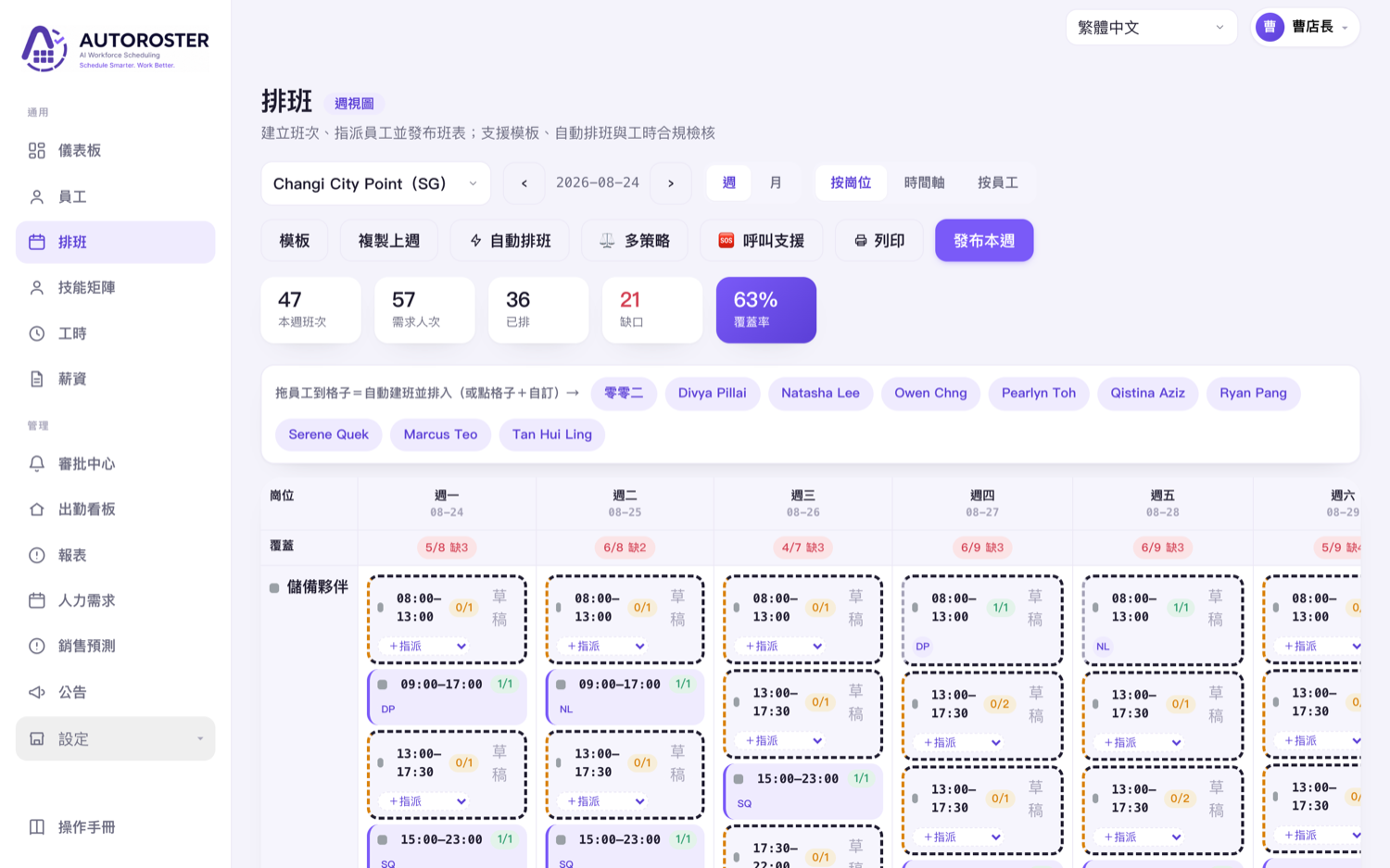
AI demand forecasting can turn the most mentally taxing part of this into a first draft: combining revenue trends, day of week and seasonal events, it directly suggests staffing for each time slot. Your job is to fine-tune the draft, not to guess from a blank page.
03Expose the four hidden wastes
Lay cost out in the data and restaurant labor waste almost always falls into these four types:
- Off-peak overstaffing — too many people scheduled in quiet slots, low output and a drag on SPLH.
- Peak understaffing filled by overtime — slots that should have been fully staffed aren't, so you patch the gap with overtime afterward, and overtime costs more than regular labor hours.
- Chronic overtime — a few people carrying excessive hours over the long run, inflating overtime cost and creating turnover and compliance risk.
- Schedules not matching actual labor hours — scheduled for 8 hours but the actual clock-in often runs over, so labor hours quietly balloon and you only notice at month-end.
04Review with data so every cycle gets sharper
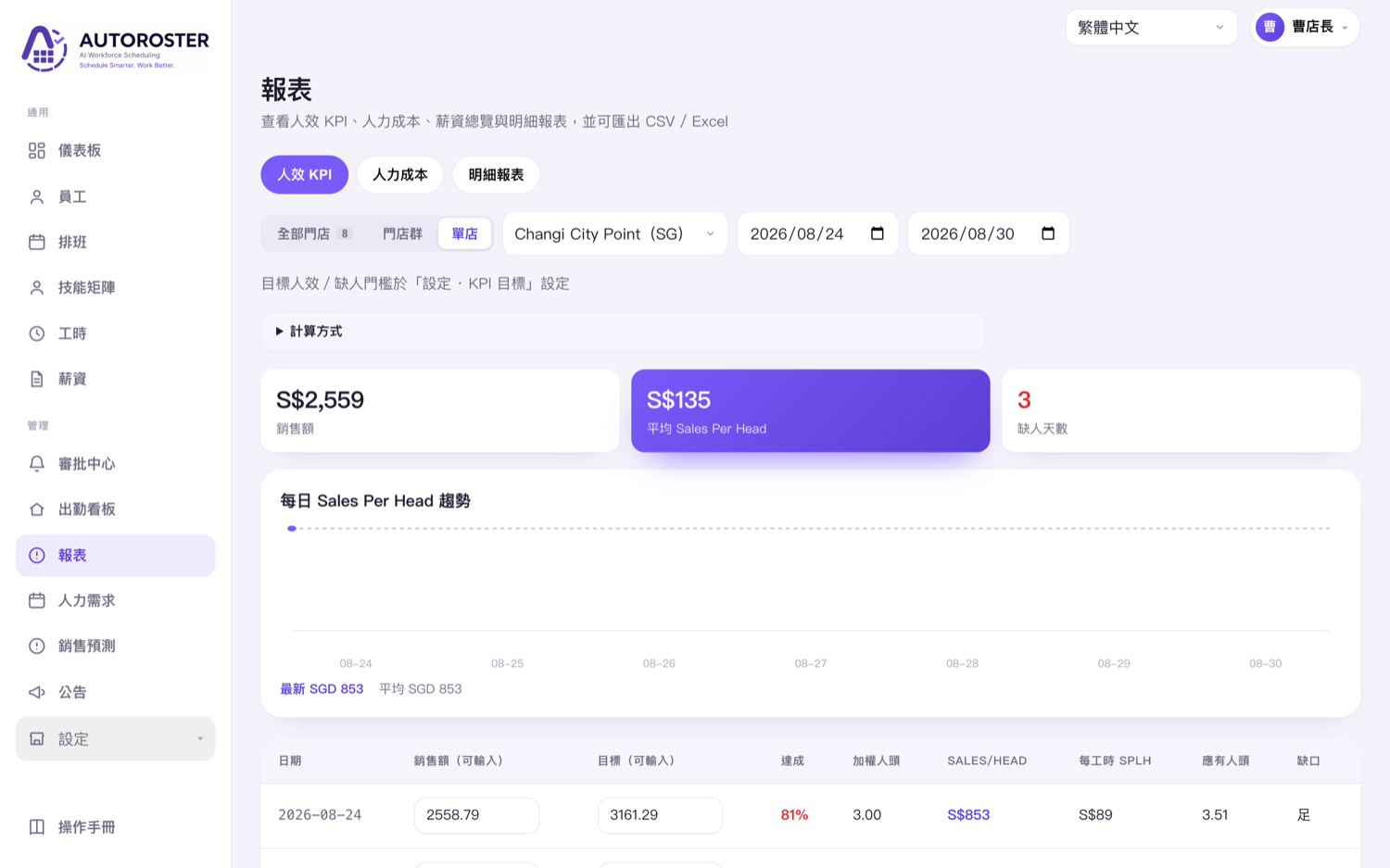
Cutting cost isn't a one-off project — it's a loop of "schedule → compare against actual labor hours → adjust the next round." Compare the schedule you built against actual clock-in labor hours, then against revenue for the period, and you can calculate SPLH for each time slot and each outlet, and see who's doing well and who has room to improve.
05Cut cost — but don't drive people away
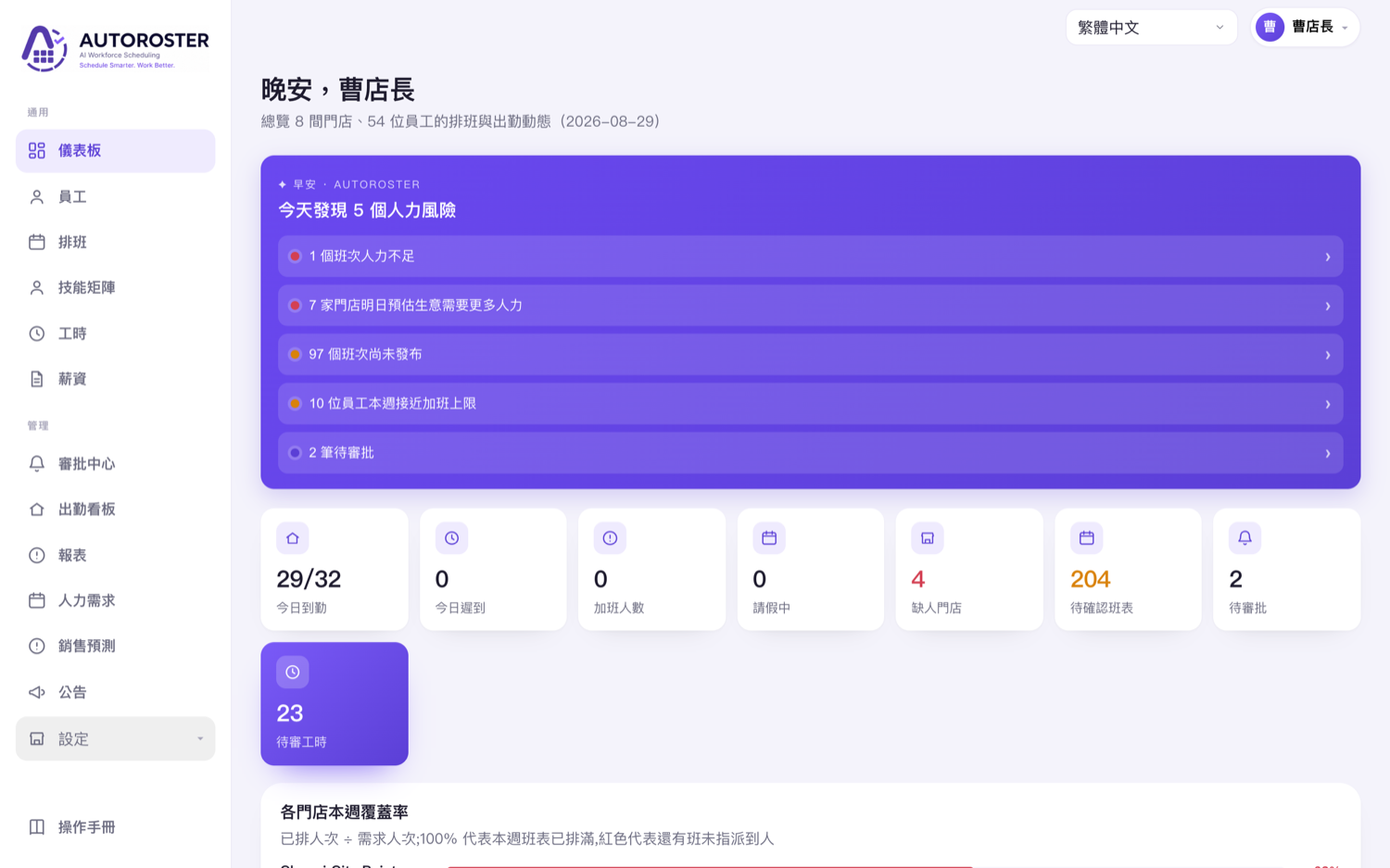
One last reminder: what you cut should be waste, not necessary labor. Squeezing every shift to the minimum looks good on paper in the short term, but if service collapses and staff burn out and quit, recruitment and training costs end up higher. Genuinely healthy cost-cutting means:
- Cut off-peak overstaffing and needless overtime, not the necessary hands at peak.
- Make shifts fairer, spreading overtime out so a few people aren't chronically overloaded.
- Retain people through good systems — schedules published on time, shift swaps easy to request, labor hours calculated clearly. When the employee experience is good, people naturally stay.
The answer to labor cost was never "how low can you cut it," but "how precisely can you use it." Learn to measure labor cost percentage and SPLH, then use demand-based scheduling, expose the four wastes, and review with data — and you'll find that as cost comes down, service gets steadier and staff stay longer too. That's the labor efficiency a restaurant chain should be aiming for.