
"I sent the roster, but he didn't seem to get it." "Pay was short, he came to ask, and I couldn't explain it clearly either." For restaurants hiring foreign workers, the biggest cost is often not wages themselves but the communication and trust cost of the language barrier. A roster no one can read, clock-in no one can operate, hours and pay no one can reconcile — every small thing can become a misunderstanding, and turnover.
The good news: most of these problems are solved by one thing — letting workers use their own language.
01Three hidden costs of managing foreign workers
Rosters and announcements they can't read
A roster sent in the local language, an announcement posted in it — to a foreign worker it may as well be code. The result: the manager repeats everything verbally one by one, or the worker takes the wrong shift or misses a key notice. The communication cost lands entirely on the floor supervisor.
Opaque hours and pay
"Why is it less this month?" is the most common — and hardest to explain — question from foreign workers. When a worker can't see how their hours accumulate or how pay is calculated, trust is hard to build and disputes keep recurring.
Higher turnover
Language gaps, feeling disrespected, insecurity about pay — all push turnover up. And every replacement is another round of recruiting, onboarding and teaching the tools.
02Everyone in their own language: an 8-language employee app
The AUTOROSTER employee app supports 8 languages. A worker picks their language after logging in, and the whole interface — roster, clock-in, hours, pay, announcements — switches to their mother tongue and remembers it. One system covers every nationality in your store; the manager doesn't need a separate process for foreign workers.
This isn't just "translating a few buttons" — even the information workers most need to understand, hours and earnings, is shown in their language. Here's the same app in two languages:
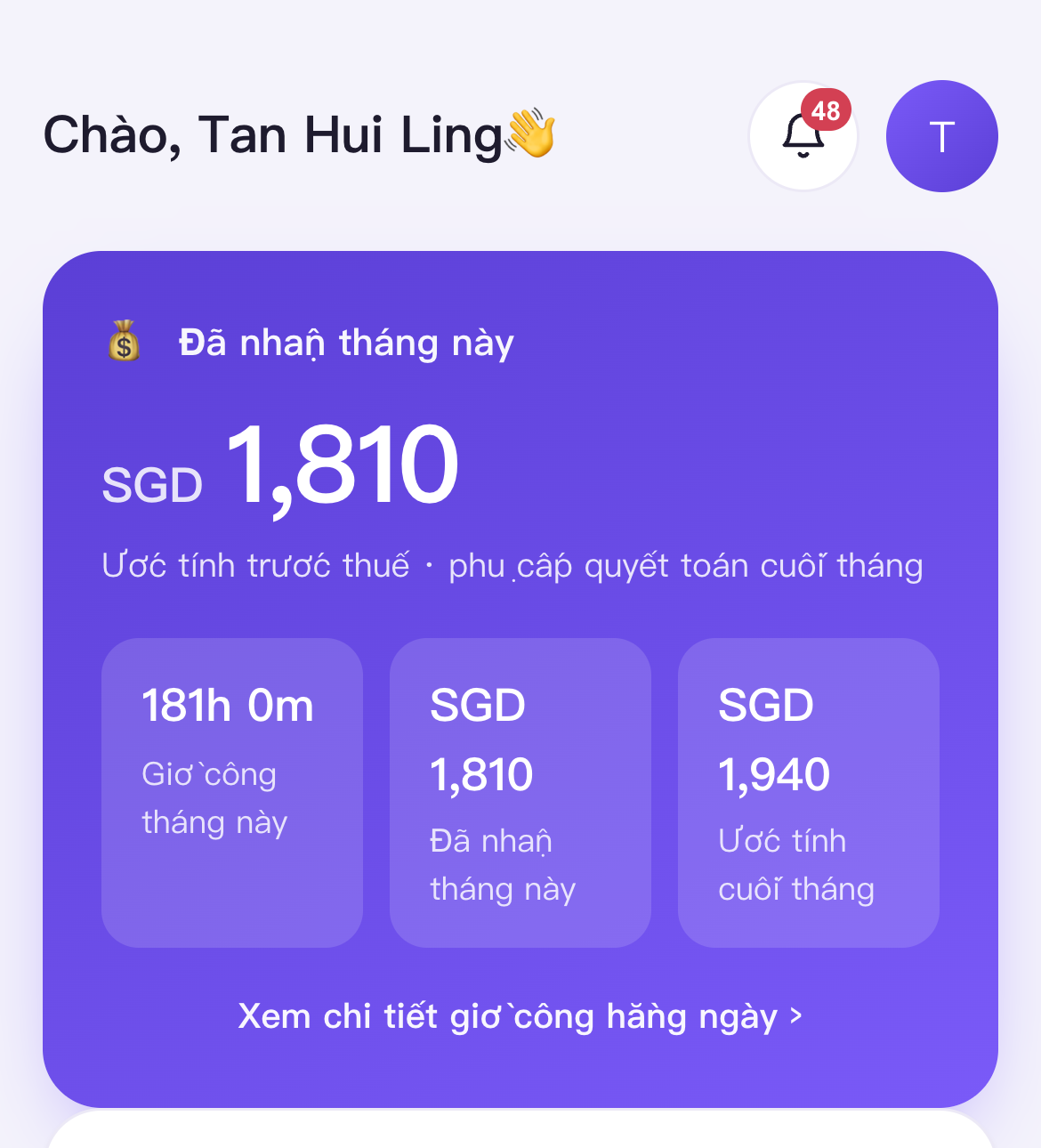
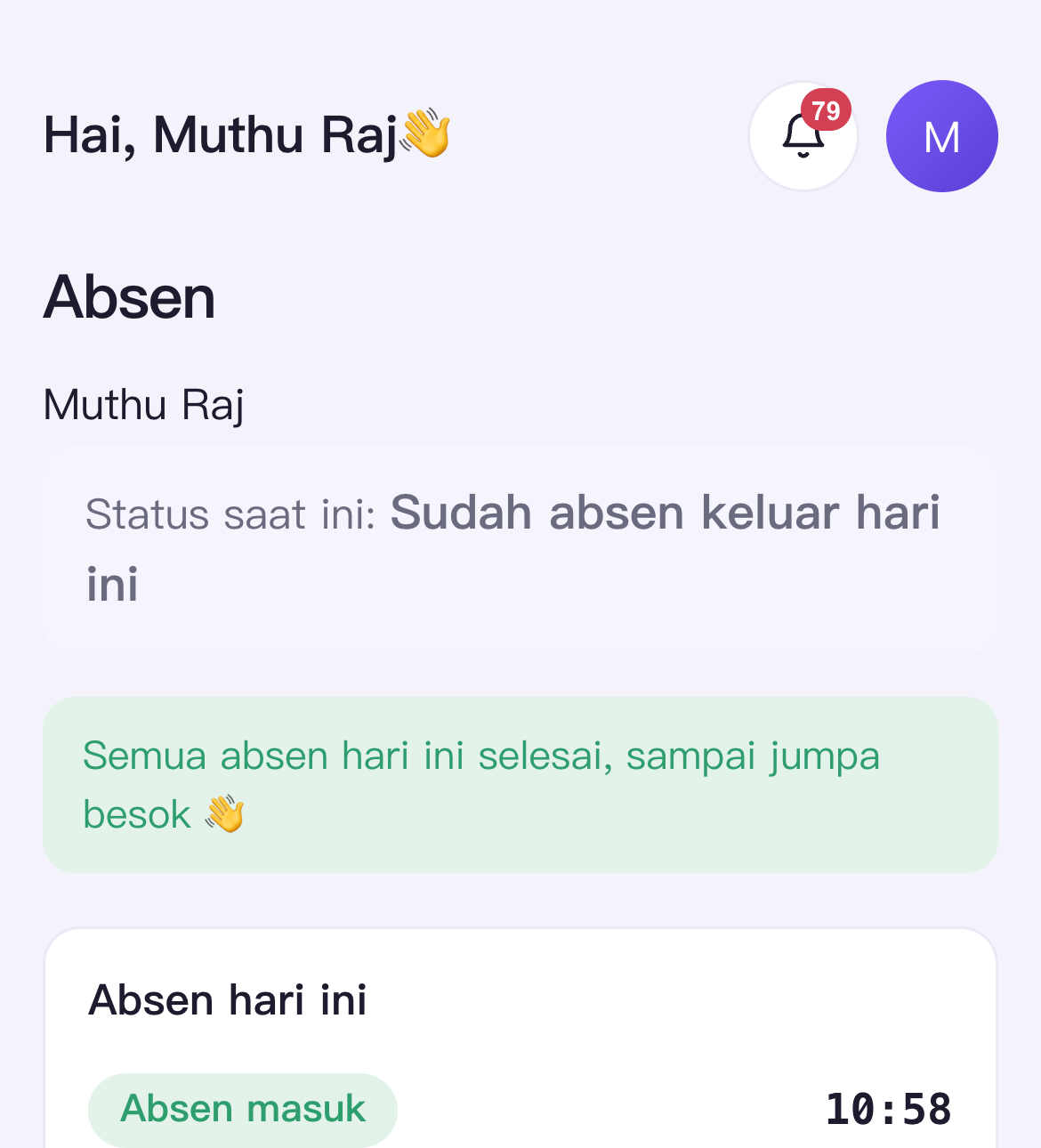
Real product screensA Vietnamese worker sees hours and earnings in Vietnamese; an Indonesian worker sees the clock-in page in Indonesian — one system, each in their mother tongue.
03Clocking in is so simple there's nothing to teach
Even with a native-language interface, if the operation is complex the floor won't use it. So clocking in is one big button: show up, open the app, tap Start — done. No employee number to type, no password flow to remember.
And the clock-in point is set by the manager on a map in the back office — wherever the outlet is, with no hardware to install. GPS, WiFi and NFC can be combined per outlet to make sure "the person clocking in is really on site". We break that down fully in a separate article 👇
04Transparent hours & pay = trust = retention
Look again at that Vietnamese screen: the worker sees, in their own language, this month's accumulated hours, pre-tax estimated earnings and the month-end projection — each traceable to their own clock-in records. That matters far more than "convenience":
- Fewer disputes — the "why is it less this month?" question has an answer the worker can open themselves, not a payday argument.
- Trust — transparency tells workers they're treated fairly, which matters especially for foreign workers.
- Retention — workers who feel secure stay, and retention itself is the biggest cost saving.
05For managers: one system for everyone
Last and most overlooked: foreign workers shouldn't be "a separate process". In AUTOROSTER, adding a foreign worker is exactly the same as adding a local one — basic details, store and position, done in minutes; scheduling, clock-in, hours and pay all run on the same line. Nationality adds nothing to the manager's workload.
| Dimension | Without a multilingual system | AUTOROSTER |
|---|---|---|
| Reading the roster | Local-language roster, repeated verbally | Worker reads it in their own language |
| Clock-in | Needs teaching, error-prone | Native UI + one-tap clock-in |
| Hours & pay | Opaque, dispute-prone | Self-check in own language, tied to clock-in |
| Onboarding | Separate flow for foreign staff | Identical to local staff |
| Language setting | — | Worker picks from 8 languages |
The labour shortage is structural, and foreign workers will only matter more. Rather than treating language as a barrier to management, let the tool cross it for you — when every worker can read the roster, clock in easily and see their own hours and pay in their own language, what you save is communication cost, disputes, and something rarer still: the trust and stability of your team.